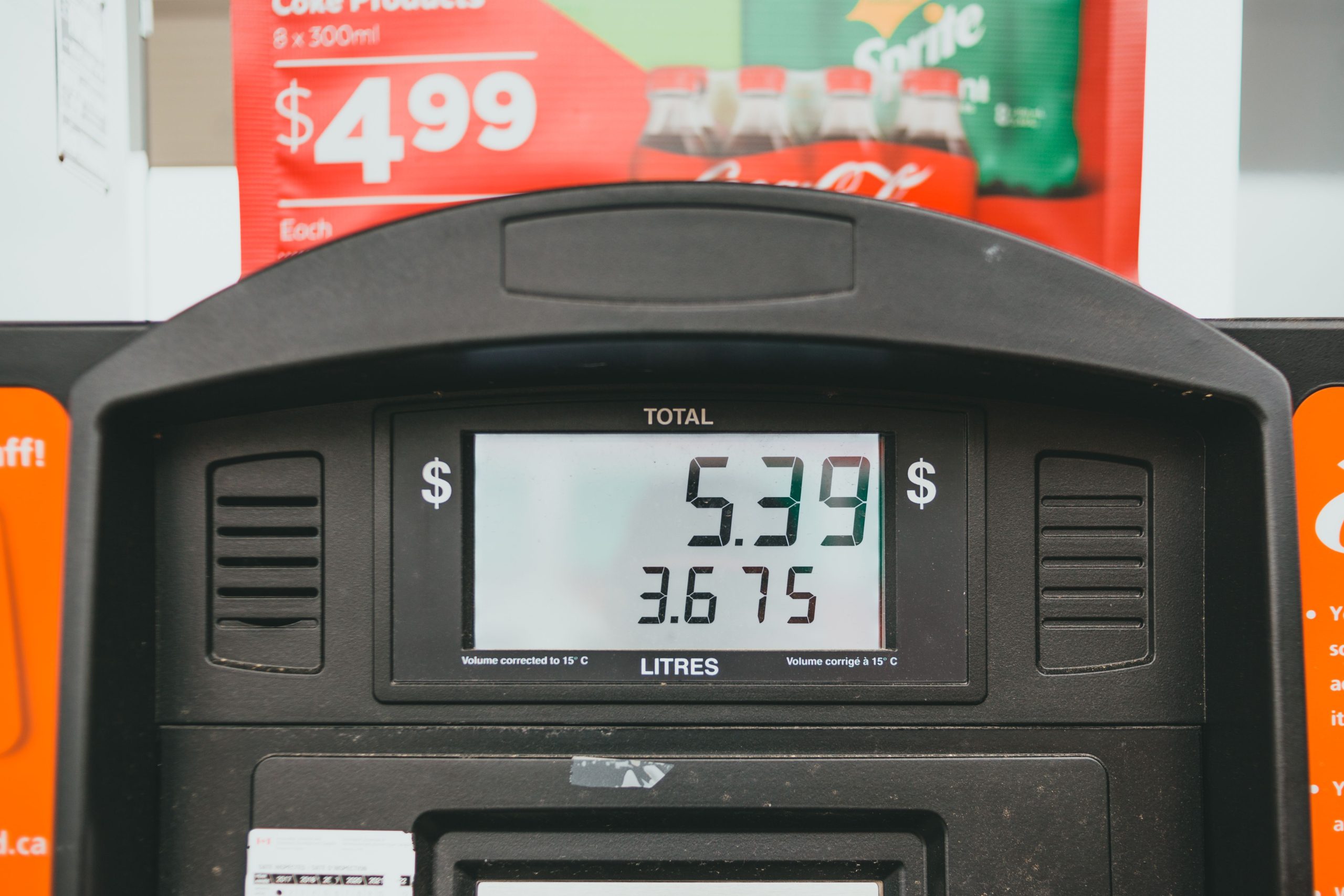
Fuel subsidies are often discussed as a simple price benefit: the government helps keep petrol, diesel, kerosene, liquefied petroleum gas or other fuels below a reference price, and households pay less at the point of purchase. That immediate saving is real. A lower fuel bill can protect a family’s monthly cash flow, particularly during a sudden energy-price shock.
But the household effect is larger than the number on a fuel receipt. Fuel is also an input into commuting, freight, farming, electricity generation and public services. A subsidy can therefore change the cost of living in several directions at once: it may reduce direct spending today, while also creating fiscal pressure, encouraging fuel use and affecting the resources available for other forms of household support.

What a fuel subsidy changes in a household budget
There are three main channels.
- Direct spending: drivers, households using heating or cooking fuels, and small businesses pay less for the subsidised product.
- Indirect prices: businesses may face lower transport and production costs, which can reduce pressure on the prices of food, deliveries and other goods.
- Public spending: the government must finance the subsidy through tax revenue, borrowing, lower oil-sector revenue or reduced spending elsewhere.
The first channel is easiest to see, but it is not necessarily the largest for every household. A family without a private car may receive little direct benefit from a petrol subsidy while still paying for fuel embedded in bus fares, food distribution, home deliveries and electricity.
This is why the same policy can feel generous to one household and barely noticeable to another. The result depends on vehicle ownership, distance travelled, location, income, the type of fuel used and how quickly businesses pass lower costs through to consumers.
The immediate relief is strongest for fuel users
Suppose a household buys a fixed amount of petrol each month. If the subsidy reduces the retail price, the household keeps the difference between the unsubsidised and subsidised prices. That money can be used for groceries, rent, debt payments or savings. For people who must drive to work, school or medical appointments, the benefit may be more than discretionary spending: it may preserve access to employment and essential services.
The benefit is also valuable when prices rise suddenly. A subsidy can delay the full effect of an international oil-price spike, allowing households time to adjust. The International Energy Agency reported that worldwide fossil-fuel consumption subsidies exceeded USD 1 trillion in 2022, when governments used a range of measures to cushion consumers from unusually high and volatile energy prices. The policy reduced immediate hardship, although the agency also noted that it weakened incentives to reduce consumption and diverted public resources.
That short-term stabilising role should not be dismissed. A household cannot always replace a car, move closer to work or switch cooking equipment within a few weeks. The practical question is whether a temporary buffer becomes a permanent, universal discount.
Why the grocery bill can rise even when petrol is cheaper
Fuel is part of the cost of getting food from farms and factories to shops. Diesel may power tractors, irrigation pumps, fishing vessels, refrigerated trucks and warehouse equipment. Petrol and diesel also affect the cost of transporting workers and servicing retail locations.
When a subsidy lowers these input costs, it can moderate price pressure. When a subsidy is reduced, some of those costs may move through the supply chain. The effect is not one-for-one: wages, rent, exchange rates, competition, weather and commodity prices also matter. A fuel-price change is one contributor to food inflation, not a complete explanation for it.
The World Bank’s research on energy prices describes this indirect route clearly: higher petroleum prices can reduce effective household income not only through direct fuel purchases, but also through more expensive goods that use fuel as an intermediate input. Food matters particularly because lower-income households often devote a larger share of their budgets to essential items.

Commuting costs are not just a private-car issue
A common assumption is that fuel subsidies mainly help car owners. That is often true for the direct benefit, but transport markets connect households in less obvious ways.
Bus operators, taxi companies, delivery services and small traders may use petrol or diesel as a business input. If their costs rise, fares or delivery charges may eventually rise as well. Employers may also face higher distribution and travel costs, which can affect prices, hiring decisions or the location of services.
Public transport can soften this impact when it is available and affordable. Yet transport systems differ sharply between cities and rural areas. A household with frequent buses may be able to absorb a fuel-price change by switching modes; a rural household with limited service may have no practical alternative.

For this reason, the household impact of subsidy reform should be assessed geographically as well as by income. A modest price increase can be manageable for a well-connected urban household and difficult for a low-income household whose work, school and healthcare require long-distance travel.
The distribution question: who receives the benefit?
A broad subsidy is usually linked to consumption: the more subsidised fuel a person buys, the larger the absolute discount. This can make the policy easy to administer, but it does not necessarily direct the most support to the households with the least financial capacity.
The World Bank’s study of the distributional and health effects of fossil-fuel subsidy reform found that, across its country sample, the estimated absolute consumption burden of reform for the richest decile was 12.6 times that of the lowest-income decile. In relative terms, however, the difference was much smaller. That distinction matters: higher-income households may receive more subsidy in total, while lower-income households can still feel a price increase more severely relative to their available income.
The study also estimated that reform across 25 countries could prevent 360,000 premature deaths by 2035 through improved air quality. These estimates are modelled results for the countries and assumptions in the study, not a universal forecast. They illustrate why the budget discussion cannot focus only on the pump price.
| Finding | Household-budget implication |
|---|---|
| Global fossil-fuel consumption subsidies exceeded USD 1 trillion in 2022, according to the IEA | Price protection can be substantial during an energy shock, but the fiscal scale can also be large |
| The World Bank study estimated a 12.6-to-1 difference in absolute reform burden between the richest and lowest-income deciles across its sample | Universal discounts may deliver larger total benefits to high-consumption households, while price rises can still weigh heavily on poorer budgets |
| The same World Bank study estimated 360,000 premature deaths could be prevented by 2035 in 25 countries under its reform scenario | Fuel pricing can affect household welfare through health and air-quality outcomes as well as cash spending |
These findings use different methodologies and country samples; they should not be treated as directly comparable measures of one programme.
What the government gives up
A subsidy is not costless because the household does not see the full price. The cost is recorded elsewhere in the public finances or in the balance sheets of state-owned energy providers. During a price spike, the required support can expand quickly.
That creates an opportunity-cost question. The same fiscal resources might otherwise support income transfers, schools, clinics, road maintenance, public transport or energy-efficiency programmes. The effect on households depends on what would have been funded instead, so it is not accurate to describe every subsidy cost as a direct loss to families. It is more precise to say that a subsidy competes with other uses of public money.
There can also be a timing problem. A government may keep prices stable for months, then face a much larger adjustment when the gap between the domestic price and the underlying cost becomes difficult to finance. Smaller, more predictable adjustments can be easier for households and businesses to plan around than a sudden correction, provided that support is available for people who cannot absorb it.
Why targeted support is often more precise
When the goal is to protect household living standards rather than to make fuel cheap for everyone, targeted assistance can be more efficient. Options include direct cash transfers, transport vouchers, discounts limited by income or vehicle use, support for public transport, and temporary payments during an energy-price shock.
The IMF’s analysis of energy subsidies and inflation argues that targeted transfers can protect vulnerable households at lower fiscal cost and with less pressure on core inflation than broad consumer energy subsidies. The design still matters. A transfer must reach eligible people, arrive quickly enough and reflect the cost differences between urban, rural and mobility-dependent households.
There is a genuine trade-off here. Universal fuel discounts are visible and relatively simple at the point of sale. Targeted programmes require reliable household data, payment systems and clear eligibility rules. A technically better policy can fail if people cannot register, if payments arrive late or if households just above an eligibility threshold are exposed to a large price change.
For a neutral overview of how governments weigh affordability, fiscal pressure and subsidy design across markets, readers can consult this regional economic coverage as one example of the broader policy debate. The relevant lesson is general: subsidy design must account for who uses fuel, how prices are administered and how support is targeted.
Five questions households should ask about a subsidy change
1. Will the retail price change immediately?
Some reforms are phased in, while others change a regulated price on a set date. The timing determines whether a household needs to adjust its next monthly budget or prepare for a longer transition.
2. Which fuels are covered?
Petrol, diesel, cooking gas, kerosene and electricity may be treated differently. A change in one fuel does not necessarily predict what will happen to the others.
3. Is compensation available?
Look for the eligibility rules, payment method and start date of any cash transfer, voucher or fare support. A promised programme is not the same as money already available to a household.
4. What alternatives are realistic?
Public transport, car-pooling, route changes and efficiency improvements can reduce exposure, but only where they fit a household’s location, work schedule and safety needs.
5. Could other prices move later?
Monitor transport fares, delivery charges and staple-food prices over time. Businesses may adjust with a delay, and other costs may move for unrelated reasons, so avoid attributing every price change to fuel alone.
A household-budget view of the policy
Fuel subsidies can be useful emergency protection. They can prevent a sudden energy shock from immediately reaching the pump, the bus fare and the grocery supply chain. Their weakness is that a universal discount follows fuel consumption rather than financial need, and the government must absorb the difference somewhere.
The strongest policy mix is therefore usually more specific than “subsidies or no subsidies.” Temporary price relief can address an acute shock; targeted transfers can protect households with limited capacity to adapt; reliable public transport can reduce dependence on private vehicles; and transparent price rules can make future changes easier to anticipate.
For households, the practical measure of a fuel policy is not only the advertised price per litre. It is the combined effect on the monthly budget: commuting, food, deliveries, utilities, taxes and the public services that support everyday life. That wider view explains why a subsidy can feel essential in the short run, yet still need careful redesign over time.